

Modern people are often told that the central task of life is to discover who they are.
The advice appears everywhere. Find your voice. Follow your passion. Be true to yourself. Build a life that reflects your values rather than the expectations of others.
There is wisdom in this. The ability to step back from inherited assumptions and ask whether they deserve our loyalty is one of the great achievements of modern freedom. A person should not be trapped by the circumstances of their birth. Families can become oppressive. Communities can become suffocating. Traditions can become prisons. The freedom to leave, dissent, and begin again is not a luxury. It is often a moral necessity.
Yet a strange paradox has emerged. The same society that has expanded personal freedom to an unprecedented degree has produced a growing sense of disorientation. People possess more opportunities to choose their identities than perhaps any generation in history, yet many struggle to answer a simpler question: what makes any identity meaningful in the first place?
The problem is not freedom. The problem is that freedom has increasingly been separated from the conditions that make it intelligible.
The question is no longer merely who we are. The deeper question is what kind of world makes a self possible.
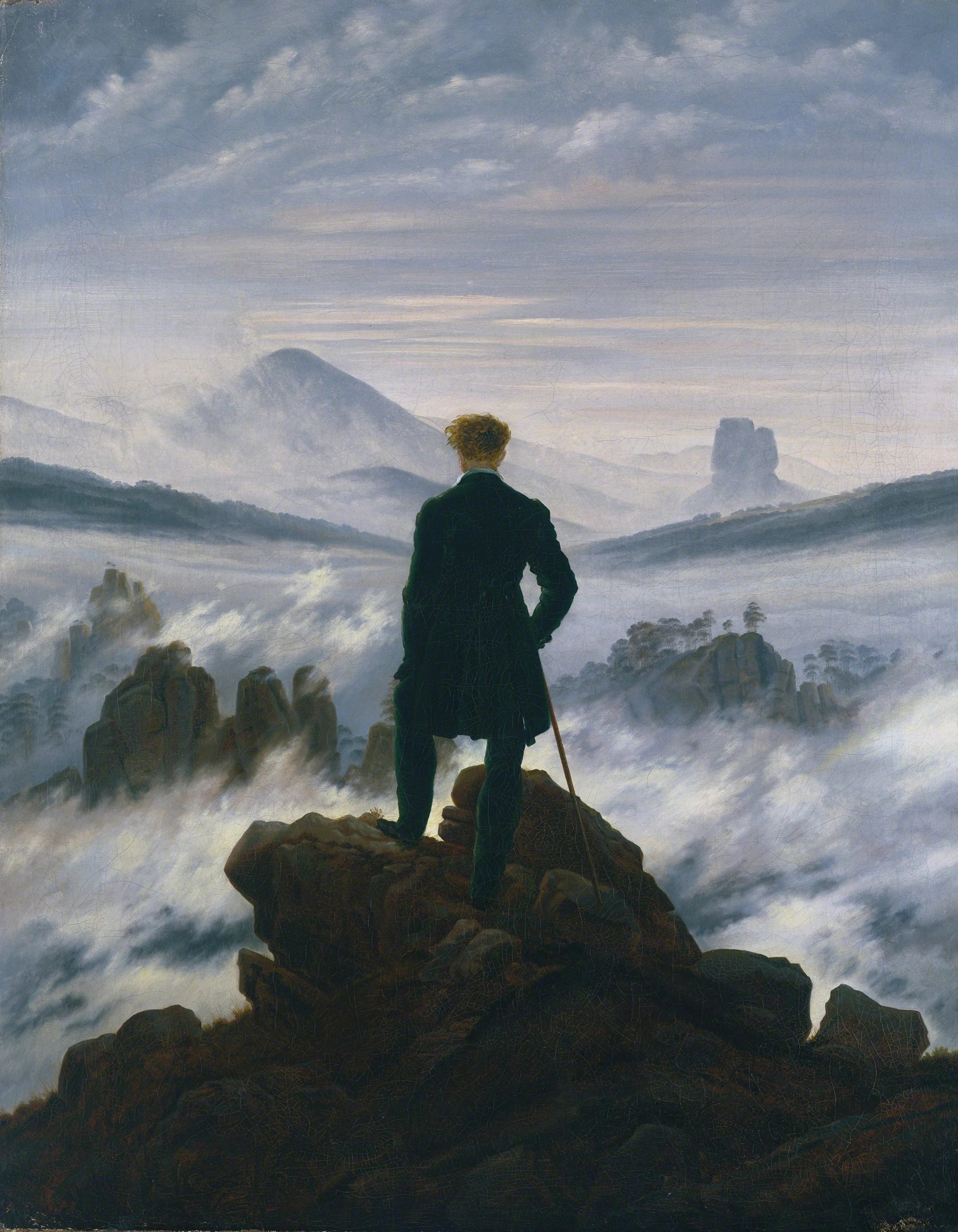
Freedom Clears Space. Meaning Fills It.
Modern liberal societies are right to defend individual freedom. Many forms of belonging deserve criticism, and some deserve rejection altogether. A woman leaving an abusive marriage, a young adult departing a destructive religious environment, or a citizen resisting an unjust political order is not abandoning meaning. They are refusing a distorted version of it.
This is why the liberal emphasis on choice remains indispensable. Human beings need room to question the worlds that formed them.
Yet choice alone cannot tell us what is worth choosing.
A person may have complete freedom to leave a town, change careers, abandon a faith, reinvent a lifestyle, or relocate across the country. None of those freedoms automatically answer the question of what deserves devotion once the old commitments have been discarded.
Freedom removes obstacles. Meaning supplies direction. Confusing the two has become one of the defining mistakes of modern culture.
Many people have been taught that fulfillment emerges from maximizing options. More choices, more customization, more flexibility, more autonomy. Yet human beings rarely build meaningful lives by preserving possibilities indefinitely. Meaning tends to emerge through commitments that narrow possibilities while deepening experience.
Marriage closes certain doors. Parenthood closes others. Friendship creates obligations. Citizenship imposes responsibilities. Craft demands discipline. Love requires sacrifice.
The very commitments that limit our options are often the same commitments that give our lives depth.
Why Meaning Cannot Be Self-Created
One response to this problem is to turn inward. If traditional sources of meaning have weakened, perhaps meaning can simply be generated by the individual.
This solution has become increasingly popular. Meaning becomes a matter of personal preference. What matters is what feels significant to me.
The appeal is obvious. It preserves autonomy while avoiding dependence on external authorities.
Yet the position contains a contradiction.
Meaning cannot be created entirely by the self because the self does not exist in isolation. Human beings arrive in a world already saturated with language, stories, symbols, institutions, and relationships. Even our most private thoughts depend upon concepts we inherited from others.
Charles Taylor’s work is particularly illuminating here. His argument is not that individuals should obey tradition or conform to society. It is that identity emerges within what he calls horizons of significance, larger frameworks that make our choices intelligible.
A common objection immediately arises. Does this not simply reintroduce conformity under a more sophisticated name?
The answer is no, because intelligibility and approval are not the same thing.
A person can reject the values of their family. They can criticize their nation. They can leave a religion. They can become a reformer, dissenter, or revolutionary. What they cannot do is rebel from nowhere. The very language through which resistance becomes meaningful is inherited from the world they are criticizing.
Dependence upon a horizon does not require obedience to it. It merely acknowledges that meaning always emerges against a background. The revolutionary still speaks a language. The reformer still appeals to moral standards. Even rebellion presupposes a world that can be challenged.
Dialogue and Awakening
At this point another philosophical voice enters the conversation.
Martin Heidegger and Charles Taylor are often grouped together because both criticize shallow understandings of authenticity. Yet they are concerned with different problems.
Taylor worries that authenticity collapses into subjectivism when individuals lose contact with shared horizons of meaning. Heidegger worries that individuals disappear into the assumptions and routines of everyday life.
One emphasizes dialogue. The other emphasizes awakening.
For Taylor, we become ourselves through conversations with people, traditions, and moral frameworks that shape our understanding of what matters.
For Heidegger, the danger is not merely intellectual conformity. The influence of “the they” is woven into ordinary existence itself. We inherit ways of speaking, valuing, and understanding long before we become aware of them. Authenticity does not mean escaping this condition altogether. It means becoming conscious of it and assuming responsibility for one’s own existence within it.
Despite their differences, both reject a popular modern fantasy: that authenticity simply means expressing whatever happens to be inside us.
Authenticity is not self-expression. It is a more demanding task. It requires asking whether the life we are living is genuinely ours.
The Comfort of “The They”
Heidegger described ordinary social existence through the concept of “the they.”
The phrase does not refer to a conspiracy or ruling class. It refers to the anonymous force of public assumptions.
People pursue careers because one pursues them. People adopt opinions because one holds them. People fear certain outcomes because one fears them.
The power of “the they” lies in its invisibility. Most individuals experience inherited assumptions not as assumptions but as reality itself.
This problem has become more subtle rather than less.
Modern culture celebrates individuality constantly. Yet much of what passes for individuality consists of selecting from preexisting categories. Aesthetic identities, political tribes, consumer preferences, lifestyle brands, and online communities provide ready-made frameworks for self-definition.
The result is a peculiar form of conformity disguised as freedom.
The question is not whether our choices are unique. The question is whether they have been examined.
Authenticity begins not when we become different from others but when we become conscious of the forces shaping us.
Technology and the Managed Life
Heidegger’s critique of technology is often misunderstood as nostalgia. It is better understood as a concern about perception.
Technology changes more than what we do. It changes how reality appears.
The modern world increasingly encourages people to interpret themselves through the language of measurement, optimization, and management. Attention becomes a resource. Health becomes a dashboard. Time becomes productivity. The self becomes a project.
What makes contemporary technology distinctive is not simply that it measures more things. Human beings have always measured.
What is new is that measurement increasingly accompanies experience itself.
A walk is tracked while it is happening. Sleep is evaluated while it is being lived. Reading is quantified while it occurs. Exercise is monitored in real time.
The activity and the audit now occupy the same moment.
This subtle shift matters. Historically, experience came first and evaluation followed. Today they increasingly arrive together. Over time, it becomes difficult to distinguish experience from assessment. The walk risks becoming a data set. The workout becomes a score. Rest becomes performance recovery.
The logic of management gradually expands beyond its proper domain.
The danger is not that measurement exists. The danger is that a meaningful life becomes increasingly difficult to encounter except through metrics.
Why Consumption Cannot Solve the Problem
Consumer culture offers its own response to the crisis of meaning.
Identity becomes something assembled through purchases, aesthetics, affiliations, and carefully curated signals of taste.
This works because objects genuinely do communicate meaning. The books on a shelf, the art on a wall, the music one loves, and the places one chooses to spend time all reveal something about a person.
The mistake occurs when symbols replace practices.
Buying a guitar does not make someone a musician. Owning books does not create wisdom. Purchasing hiking equipment does not establish a relationship with nature. Displaying concern for justice does not make someone just.
Meaning grows through participation.
The deepest aspects of human life emerge through repetition, discipline, devotion, and time. They cannot be purchased because they are not products.
They are ways of being.
Better Belonging
The answer to modern fragmentation is not a return to unquestioned authority.
Too many people have suffered under demands for loyalty that left no room for criticism.
The answer is better belonging.
This phrase can sound vague until tested against a difficult case.
Consider a religious community confronted by a member who raises uncomfortable questions about doctrine or practice. Some disagreements can be absorbed. Others challenge the community’s understanding of itself. At a certain point every tradition faces a difficult question: Which disagreements can be accommodated, and which alter the thing being preserved?
There is no formula for answering this.
A community without boundaries ceases to be a community. A community that cannot tolerate criticism becomes a prison.
The tension cannot be eliminated. It can only be navigated.
The challenge is not to create a form of belonging free from conflict. The challenge is to cultivate forms of belonging in which disagreement is taken seriously before exclusion becomes inevitable.
The same dilemma appears in families, professions, neighborhoods, and nations. Every meaningful community must decide what it is willing to defend and what it is willing to reconsider. There is no permanent solution to this problem, only the ongoing work of judgment.
A Network of Mutuality
Martin Luther King Jr. once wrote that “we are caught in an inescapable network of mutuality, tied in a single garment of destiny.”
The line is often quoted because it is beautiful. Its deeper significance is philosophical.
King’s insight challenges the fantasy of the isolated self. Human beings are distinct individuals, but they are never entirely self-made. Their opportunities, language, values, and vulnerabilities emerge within networks of dependence that extend far beyond personal choice.
This dependence should not be understood as a limitation on individuality. It is the condition that makes individuality possible.
The self develops through relationships. Meaning develops through participation. Freedom develops through responsibility.
The most enduring forms of human flourishing arise not from independence but from interdependence freely embraced.
Recovering the World
Modern culture often treats meaning as a problem of self-discovery.
The assumption is understandable. If we can identify our authentic desires, perhaps purpose will follow.
Yet meaning rarely arrives through introspection alone. It emerges through encounters with realities that call us beyond ourselves.
Friendship. Craft. Love. Responsibility. Place.
These are not obstacles to freedom. They are the environments in which freedom becomes meaningful.
If the world appears only as a collection of options, the self becomes a chooser. If the world appears only as a system to optimize, the self becomes a manager. If the world appears only as an audience, the self becomes a performer.
But if the world appears as a field of obligations, relationships, inheritances, and possibilities worthy of care, the self can become something more than a project.
The central question of modern life is not simply who we are. It is whether we still inhabit a world capable of making that question meaningful.
The self is not the beginning of the story. The world is.
Yet the modern dilemma remains. The worlds that shape us are often flawed. Some deserve loyalty. Others deserve resistance. Most deserve both.
The task is neither blind belonging nor endless self-invention. It is learning how to inhabit inherited worlds honestly enough to criticize them and faithfully enough to care whether they endure.