

Just outside Fenton, Michigan, a narrow wooden bridge curves over a creek and into a hollow that feels older than it should. The slope down is soft and grassy, the kind of ground that quiets your footsteps. In the center of the valley stands a ring of granite and marble, each slab weathered, etched, and leaning toward memory. Runyan Creek runs alongside, whispering under the smell of wet moss and wildflowers.
In the early 1930s, a man named Charles Eugene Smith decided to bring the whole country home. A traveler with more miles on his boots than most see in a lifetime, he hauled stones from every state in the union, forty-eight back then, and planted them here in a circle. Granite, marble, some weighing ten tons, carved with state mottos and flowers. He built gateways at the east and west, hung bells that newlyweds would ring after their vows. For a while, the place filled with weddings, reunions, Sunday picnics. Peacocks strutted between the stones. Kids fed them peanuts. Smith worked alone, no crew, no shortcuts. By the late 1930s, the garden was his monument to everywhere he had been.
After his death in 1948, a former GM executive took over. He added a miniature train, a petting zoo, a log cabin full of fossils and oddities. The Sunken Gardens became a road trip stop, part roadside attraction, part fairy tale. Then, as quickly as it bloomed, it fell quiet. The property went to a cemetery company that let the valley be. No more ads, no more tickets. The forest crept back in.

Today, finding it feels like stumbling into a secret you are not sure you should know. Eight stone paths meet at the center where a sundial once stood. The bells are gone. The arches still hold their inscriptions: Pilgrim, as you enter this Western Gate, smile. Moss has blurred the lettering, but the words still catch you.
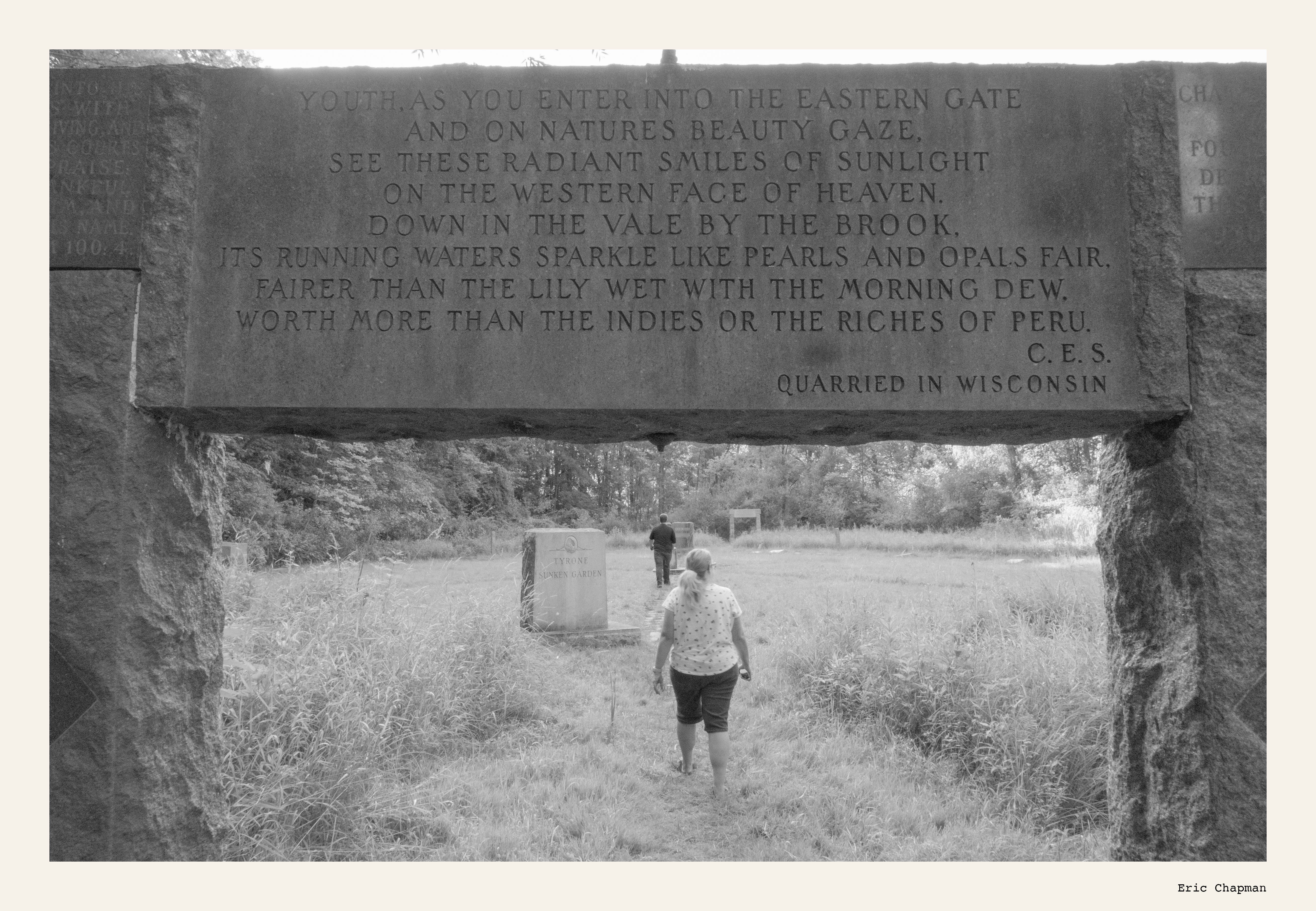
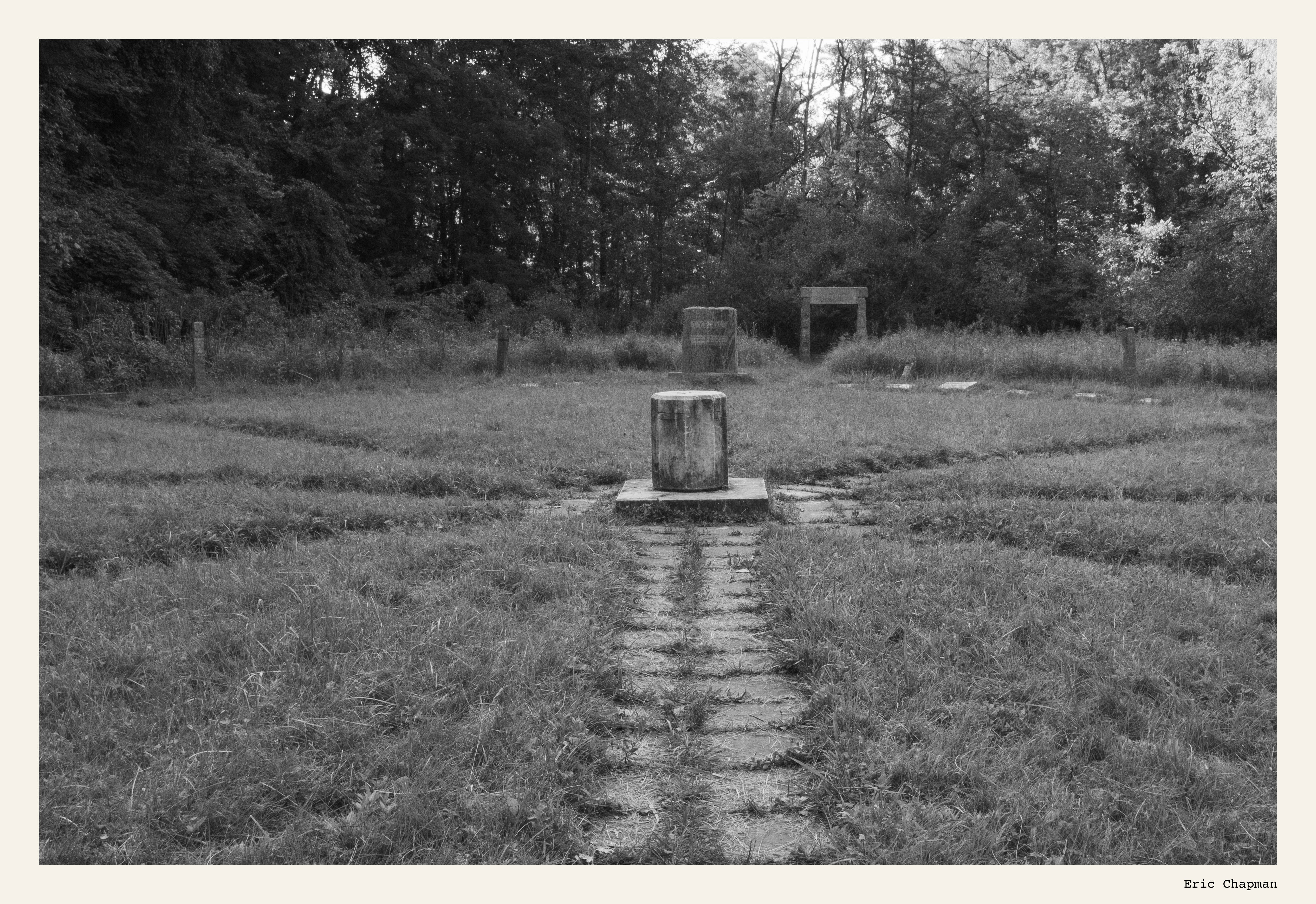
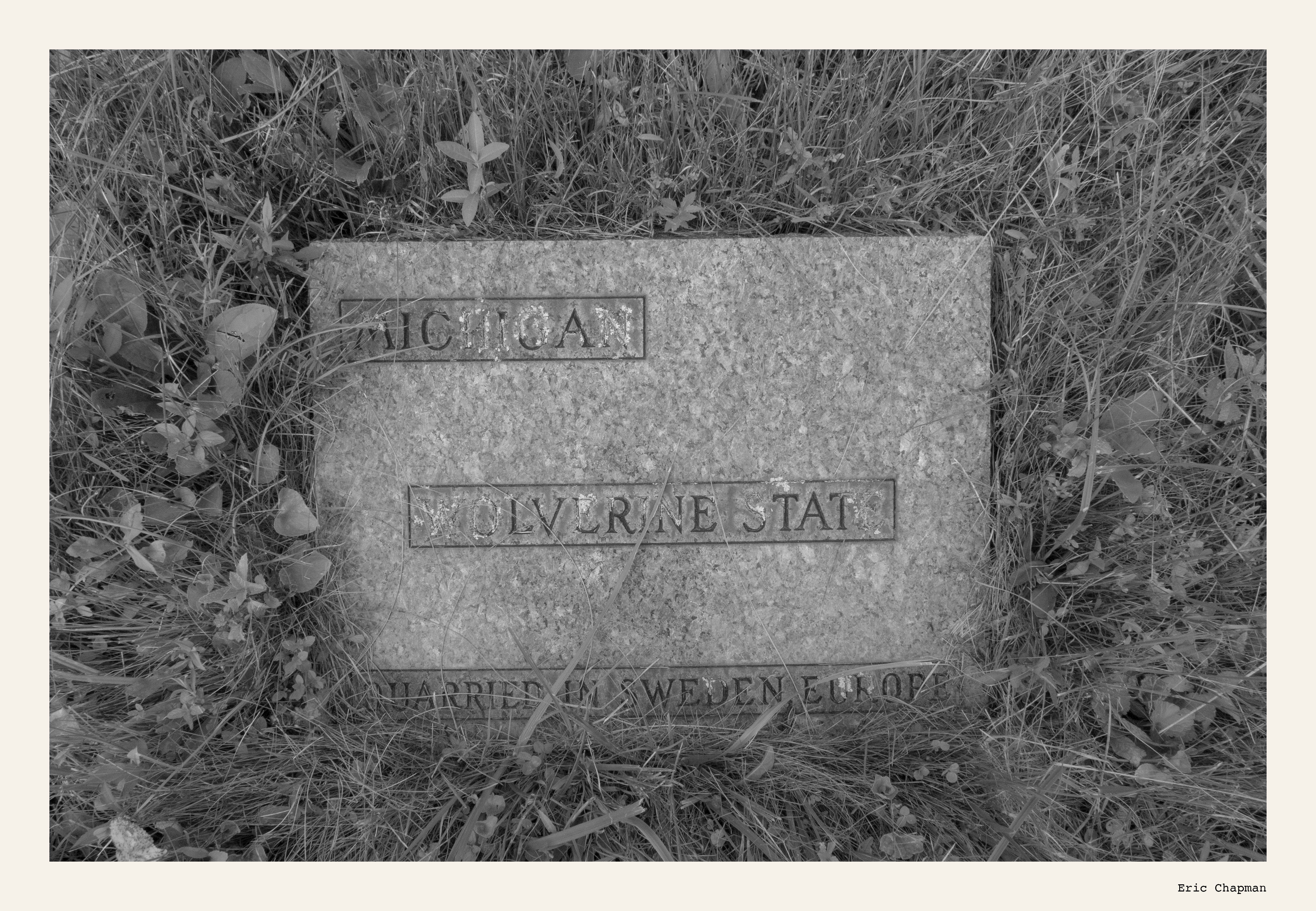

A handful of locals keep the place from disappearing completely. They clear branches, pull weeds, try to rebuild a bridge that vandals keep breaking. There is talk of restoration, to clean the stones, fix the paths, maybe hang new bells. Until then, the garden waits in its hollow, half-embraced by the woods.
It is not marked on the highway. You have to know it is there. But if you do, and you walk down the slope into the circle, you can feel the strange stillness Charles Smith left behind. A man’s life of movement set in stone, ringed by grass and creek water, still quietly welcoming anyone who makes the trip.
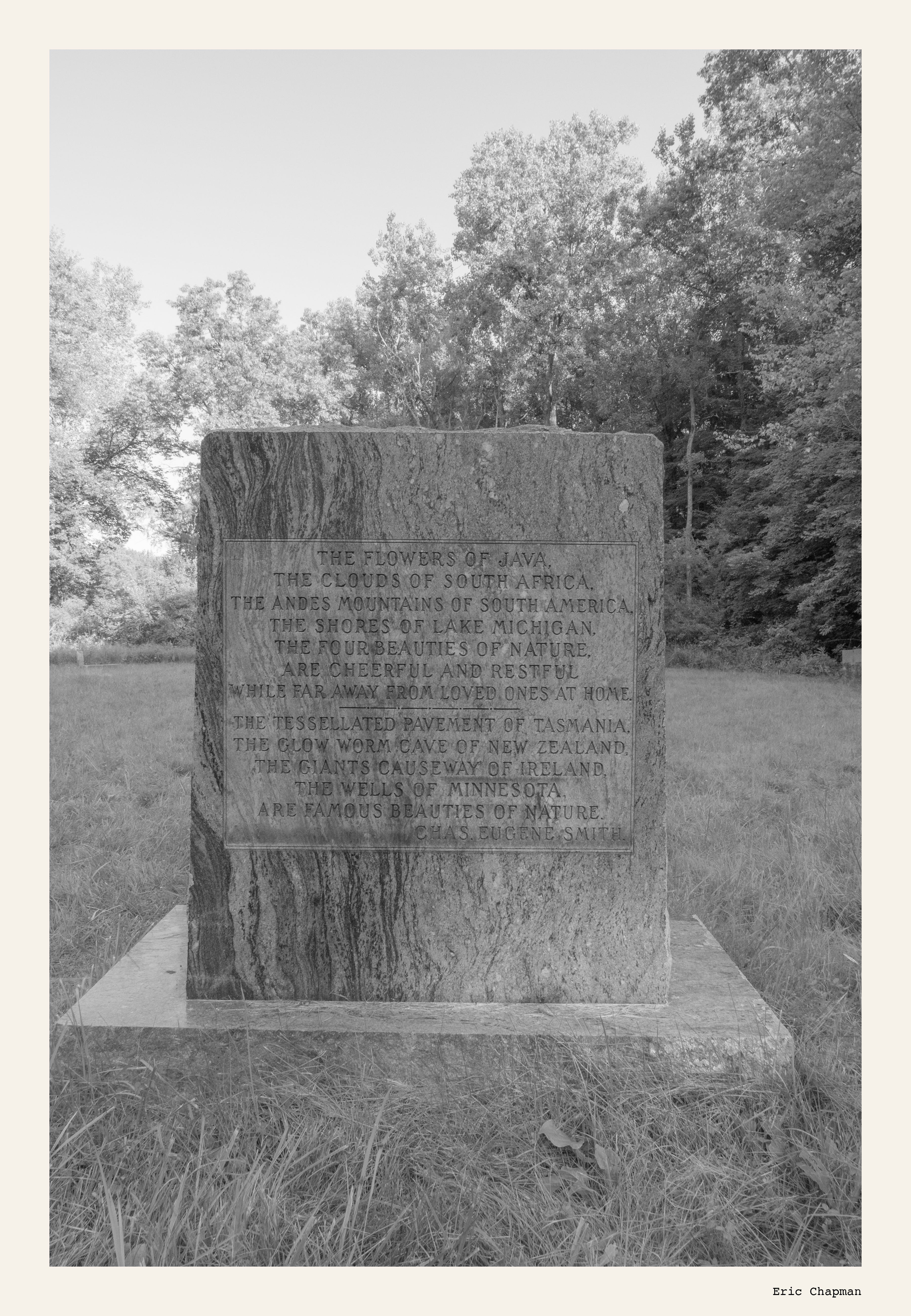
The Flowers of Java
The Clouds of South Africa
The Andes Mountains of South America
The Shores of Lake Michigan
The Four Beauties of Nature,
Are Cheerful and Restful
While Far Away from Loved Ones at Home
The Tessellated Pavement of Tasmania
The Glow Worm Cave of New Zealand
The Giants Causeway of Ireland
The Wells of Minnesota,
Are Famous Beauties of Nature
— Chas Eugene Smith