

"There are moments in our lives, there are moments in a day, when we seem to see beyond the usual—become clairvoyant. We reach then into reality." These words by Robert Henri, drawn from The Art Spirit, shimmer with a rare truth: that there are glimpses in our existence when the veil of the ordinary lifts, and what we behold is unshakably real. But what is this reality, and why does it so often feel just out of reach?
Henri speaks not of reality as the humdrum procession of hours or the weight of things tangible. Instead, he gestures toward a heightened state of being, a clarity so vivid it feels as though the world has been lit from within. It is in these fleeting moments—moments of sudden joy, profound connection, or even stark sorrow—that we are invited to step into life’s essence. To encounter reality in its fullness, he suggests, is to experience both wisdom and happiness, as though these two states are not separate but intertwined, a single vine growing toward the sun.
But Henri’s observation carries with it a quiet melancholy: “In our time and under the conditions of our lives, it is only a rare few who are able to continue in the experience and find expression for it.” Here lies the paradox of modern existence. We are inundated with tools, distractions, and conveniences that promise access to deeper truths, yet they often serve only to obscure.
Consider technology, a marvel that both extends and diminishes us. It whispers promises of connection, creativity, and efficiency but so often delivers noise, disorientation, and a thinning of attention. Social media, for instance, might seem to provide a platform for creative expression, yet its structure is less a garden for cultivating ideas than a fast-flowing river, sweeping everything downstream before it has a chance to settle. The constant refresh of notifications and updates fractures our focus, leaving little room for the stillness Henri so cherished.
Even tools designed to deepen our understanding—AI algorithms, virtual galleries, vast digital archives—often draw us outward rather than inward. They encourage consumption over creation, speed over depth. And so, while these technologies place infinite resources at our fingertips, they can also estrange us from the patient, tactile process of discovery, from the kind of deep seeing that transforms a fleeting moment into something eternal.
To dwell in the space Henri describes—a place of sustained vision and creative expression—requires a particular courage and stillness, qualities that modernity is adept at eroding. The demands of perpetual connectivity erode our ability to sit quietly with an idea, a moment, or a piece of ourselves. The very tools designed to make us "more human" often dull the sharp edge of our awareness, rendering us less so.
And yet, there is a kind of subversive beauty in resisting this tide. To unplug, even briefly, is an act of reclamation—a deliberate turning toward the quiet, the uncurated, the real. Henri's vision reminds us that such resistance is not merely possible but necessary if we are to preserve the moments of “clairvoyance” he so eloquently describes. These moments, fragile as spider silk, cannot survive in the glare of constant distraction. They require shadow, solitude, and a willingness to step outside the incessant hum of the digital world to touch something timeless.
Henri, ever the teacher, offers us a way forward: "The object isn’t to make art, it’s to be in that wonderful state which makes art inevitable." These words turn the act of creation from an external achievement into an internal condition, a readiness to receive and respond. To live artfully is not merely to produce but to attune oneself to the world’s subtleties: the slant of light across a winter field, the shifting textures of a city street, the wordless understanding that passes between strangers. Such attention transforms the mundane into the miraculous.
Henri’s wisdom carries the quiet assurance that these moments are not reserved for the select or the gifted. "It is in the nature of all people to have these experiences." If this is true—and I believe it is—then the task before us is not to summon such moments, but to prepare ourselves for their arrival. To slow down. To listen. To see.
Perhaps the greatest art we can create is the art of receptivity: to hold ourselves open long enough to catch those glimpses of the eternal that ripple just beneath the surface of things. For in these moments, as Henri so eloquently tells us, we find both the height of wisdom and the depths of happiness—a fleeting yet enduring reminder of what it means to truly live.
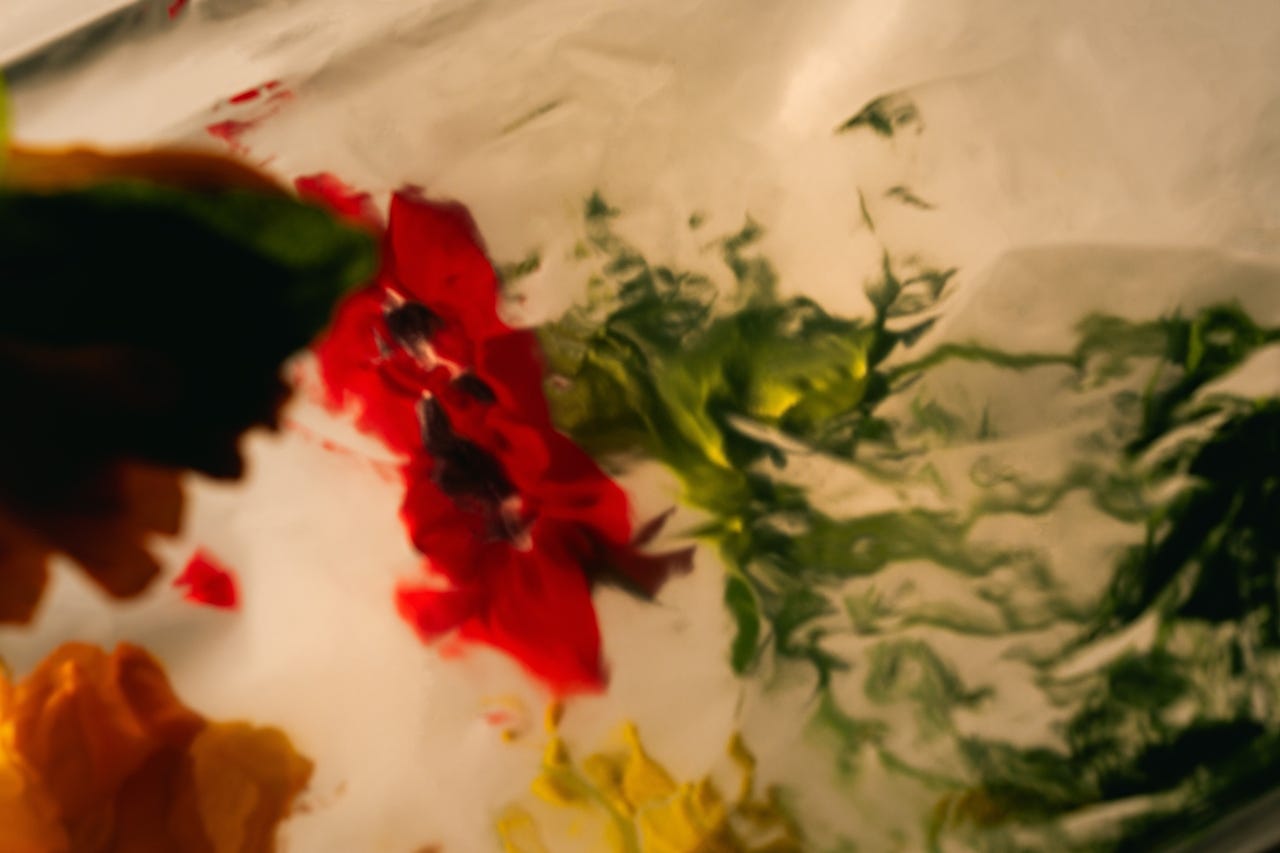
Image: Farò, Daniel. In Focus. Used with permission.